
Robotics: Enabling Intelligent, Connected and Collaborative Systems
Useful jump links:
- How Avnet Silica enables robotics development
- Key robotics applications
- Enabling technologies for robotics
- Embedded compute solutions and compute modules
- Frequently asked robotics questions
- AI's growing influence on robotics
- Featured supplier solutions for robotics
- Embedded software solutions for robotics
- Related markets and technologies
Robotic systems are already shaping modern industrial and service-sector environments. Across manufacturing and a growing range of service-sector applications such as logistics and healthcare, robots support higher levels of automation, consistency and operational efficiency.
Modern robotics solutions combine real-time control, embedded vision, edge AI, secure connectivity and efficient power architectures to enable more capable, connected and collaborative designs. They must also integrate efficiently with industrial networks, software and edge systems to deliver more interoperable operations.
For OEMs and system designers, the challenge is how to build scalable, production-ready platforms that balance performance, power efficiency, safety and long-term lifecycle management.
Avnet Silica helps customers meet this challenge by combining leading semiconductor technologies, embedded architectures, engineering expertise and supply-chain support to accelerate the development of next-generation robotics solutions.
How Avnet Silica Enables Robotics Development
Modern robotics platforms are inherently multidisciplinary. A successful design may require real-time control, embedded vision, edge AI, industrial networking, secure processing, and energy-efficient system design, all within an architecture that remains scalable across product variants and deployment environments.
Our teams' work brings expertise in compute, embedded systems, wireless and wired connectivity, AI, security, and power management, helping robotics developers make better decisions earlier in the design cycle. This is especially valuable as robotics platforms combine more software, electronics, and mechanics in increasingly complex edge systems.
Through close collaboration with leading technology partners, Avnet Silica also provides customers with access to reference designs, development kits, and product roadmaps that support architecture decisions and more efficient development. Together, these resources help create a clearer path from concept to deployment.
Key Robotics Applications
Robotics adoption now spans both traditional industrial automation and a broader range of more flexible and mobile applications. In manufacturing, robots continue to assist with assembly, material handling, welding, inspection, and other repeatable tasks where throughput, consistency, and traceability matter. Growth is also coming from warehousing, logistics, and other service-sector applications, where robots operate in more dynamic and less predictable environments.
Collaborative robots, or cobots, are an important part of this transition. Rather than replacing conventional industrial robots, cobots extend automation into tasks where proximity to people, ease of deployment, flexibility, and smaller footprints matter more than maximum speed. In practical settings, cobots support machine tending, packaging, assembly and material handling, where safe interaction, flexibility and ease of use matter.
Meanwhile, mobile robots and autonomous guided systems are taking on a larger role in intralogistics and factory flow, with vision-enabled robots providing valuable assistance with guidance, inspection, and part identification. Outside the factory, robotics is expanding into healthcare and other professional service applications. Humanoid robots remain at an early stage of commercialisation in 2026, but they are already generating interest in higher-performance edge compute, multimodal perception, and whole-body control.
These developments are closely linked to broader Industry 4.0 and Industry 5.0 priorities. As robotics becomes more connected, intelligent, and collaborative, platforms are progressively expected to integrate with industrial networks and edge systems while also supporting safe human-machine interaction, sustainability and greater operational adaptability.

Enabling Technologies for Robotics
Delivering these capabilities consistently and at scale depends on a robust foundation of compute, connectivity, embedded vision, and efficient power design.
Edge AI, Vision and Real-Time Intelligence
AI is expanding the capabilities of modern robotics solutions, particularly in areas such as embedded vision, perception, and interaction. Many of these functions are now being implemented on edge platforms that combine AI acceleration, real-time processing and close integration with sensors and control systems.
For example, NXP’s i.MX 93 family combines Arm Cortex-A55 processing with Arm Ethos-U65 microNPU acceleration and an energy-efficient architecture for Linux-based edge systems. For more advanced deployments, the i.MX 95 family adds high-performance multicore processing, AI acceleration, rich camera support, TSN-enabled networking and high-bandwidth connectivity for complex edge robotics and vision applications. NXP’s Robotics Edge Platform extends that hardware foundation with a Yocto-based ROS 2 distribution, industrial protocols, real-time capabilities, and a roadmap for additional AI/ML packages and ready-to-use demos.
Adaptive and Embedded Compute for Robotics
Robotics workloads often combine general-purpose processing, hardware acceleration and real-time responsiveness within a single system. This is particularly relevant in applications such as machine vision, industrial communication and control, where performance, latency and power efficiency all matter.
Avnet Silica’s AMD robotics portfolio spans adaptive computing platforms and x86 embedded processors. On the adaptive side, the KR260 Robotics Starter Kit is designed for robotics and industrial applications, combining native ROS 2 support with hardware acceleration for robotics, machine vision, and industrial communication and control. On the x86 side, AMD’s embedded processor and Ryzen AI Embedded portfolios provide more general-purpose compute for industrial edge systems, combining strong processing performance, AI acceleration and deterministic, low-latency performance for applications such as machine vision, industrial automation and physical AI workloads.
Vision AI and Multi-Camera Perception
The importance of embedded vision in robotics is growing, particularly in applications such as navigation, inspection, and object recognition. Designers, therefore, need practical platforms that balance AI capability, power efficiency, and system cost.
Renesas addresses this space with the RZ/V2L, an entry-level vision AI MPU built around its DRP-AI accelerator. The device combines AI capability with low power consumption, helping designers manage thermal constraints, reduce system size, and control overall cost. This makes it a practical option for embedded vision applications where power efficiency and compact implementation are important.
For more advanced multi-camera vision pipelines, the Avnet Silica and Tria QCS6490 Vision-AI Development Kit provides a higher-performance option. Based on the Qualcomm QCS6490 SOC, the kit features an energy-efficient, multi-camera SMARC compute module with a 13 TOPS AI engine, together with AI and multi-camera software support. Avnet Silica positions it for vision-AI edge applications, including service and industrial robots, making it well-suited to robotics systems that need richer video processing and scalable AI at the edge.
Motion, Power and Energy Efficiency
As robotics systems become more mobile, compact and compute-intensive, power design takes on a more vital role. Higher actuator density, battery constraints, thermal limits and tighter mechanical packaging all place greater pressure on motor-drive efficiency, power density and thermal management.
This is one reason wide-bandgap technologies such as GaN and SiC are receiving much more attention across power electronics. They help improve power conversion efficiency and enable more compact motor-drive designs, both of which are increasingly important in robotics. Within the Avnet Silica portfolio, STMicroelectronics brings together motor-control solutions with established SiC technologies and a growing GaN offering, making it a strong fit for robotics and industrial machinery designs where efficiency, motion control and thermal performance all matter.
Working on a Robotics Project? Partner with Avnet Silica…
Robotics development brings together AI, embedded compute, machine vision, industrial connectivity, motion control and advanced power design. The Avnet Silica portfolio enables customers to combine ROS 2-enabled edge processing, adaptive and embedded computing, and embedded vision and multi-camera AI capabilities to create platforms that strike the right balance between performance, power efficiency, connectivity, and scalability. Combined with system-level expertise and support from concept through production, this helps reduce development risk and accelerate deployment.
Whether you are developing intelligent factory automation, cobots, machine vision systems, mobile robots or next-generation collaborative industrial designs, Avnet Silica can help you move from concept to production-ready solution.
To discuss your robotics development project with our team, contact our experts today.
Smart Industry Overview
Your smart industry vision becomes a reality when you have a partner, like Avnet Silica, whose expertise around interoperability, security, and connectivity, can make your vision a reality, faster.
Frequently asked Robotics questions
| Questions | Answers |
|---|---|
| What is the difference between robotics, automation, and collaborative robots (cobots)? | Automation refers to systems designed to perform predefined, repetitive tasks in structured environments, typically with limited adaptability, for example, a CNC mill or pick-and-place machine. Robotics, by contrast, involves systems that can sense, process information, and act in dynamic environments, integrating perception, decision-making, and motion. Collaborative robots, or cobots, sit between these two, combining the precision and repeatability of automation with the adaptability of robotics, while being designed to operate safely alongside human workers. |
| What are the main components of a modern robotics system? |
|
|
What are the key considerations when designing a robotics system? |
|
| How is AI used in robotics? | AI enables robots to perceive, learn, and make decisions in complex environments. This includes computer vision for object detection, machine learning for predictive behaviour, and reinforcement learning for adaptive control. In robotics systems, AI is typically deployed at the edge, enabling local processing on the device. This reduces latency, improves reliability, and enables real-time decision-making without dependence on cloud connectivity, which is critical for safety and autonomous operation. |
| How does sensor fusion impact robotics performance? | Sensor fusion combines data from multiple sensors to create a more complete and accurate understanding of the environment. By integrating inputs from technologies such as vision, LiDAR, and mmWave, fusion reduces blind spots and improves perception across varying conditions. It can also serve as redundancy, allowing systems to maintain functionality if one sensor degrades or fails, thereby supporting safer navigation, especially in complex environments. |
| What is the difference between industrial robotics and service robotics? | Industrial robotics operates in structured environments such as manufacturing, where tasks are repetitive and tightly controlled. Service robotics is deployed in less predictable environments such as logistics, healthcare, and domestic settings, requiring higher levels of autonomy, perception, and adaptability. |
| What are common challenges in deploying robotics systems at scale? |
|
| Why are humanoid robots more complex to design than other robotics systems? | Humanoid robots are designed to operate in human environments, which are inherently unstructured and unpredictable. Unlike controlled industrial settings, this requires continuous perception, adaptation, and real-time decision-making. To function effectively, humanoids must replicate human motion and coordination, driving complexity in sensor fusion, AI processing, and multi-axis actuation. Challenges such as dynamic balance, dexterous manipulation, and safe human interaction further increase system and integration demands. |
| What are some real-world applications of robotics? |
|
| What is Avnet Silica’s role in robotics? |
Avnet Silica supports robotics development at a system level, helping customers move from concept through to deployment. This includes distribution of key components, system-level design support, reference designs, and development platforms. |
| Who are some of Avnet Silica’s key robotics partners? |
Avnet Silica’s robotics portfolio is built on partnerships with leading semiconductor manufacturers and embedded system providers. Key partners include:
|
| Where can I find robotics development resources? |
Visit the Avnet Silica smart industry and robotics knowledge library for technical articles, application notes, webinars, and development resources. |
Embedded compute solutions and compute modules
Embedded compute and compute modules sit at the heart of modern robotics, providing the processing headroom, determinism and integration flexibility needed to handle perception, control, connectivity and increasingly AI at the edge. As robots evolve from fixed-function machines into adaptive, vision‑enabled and autonomous systems, the choice of embedded compute platform becomes a critical architectural decision, balancing performance, power, lifecycle and scalability. Avnet Silica supports this shift through a broad portfolio of embedded compute solutions, including industry‑standard SoMs and modules, AI‑capable platforms and system‑level expertise, helping robotics developers move from evaluation to production with confidence across industrial, mobile and collaborative robot applications.
Solutions and motherboards
Solution
COM Express
Avnet Silica designs and manufactures the largest range of COM Express design standard modules in the industry. Built to unlock mainstream processing power in rugged edge applications.
Industrial Motherboards
Our selection of Industrial grade motherboards are all 24/7 certified, have long term support (7-15 years), work at industrial temperature ranges, include legacy communication support as well as providing latest generation technology.
Solution
COM HPC
Avnet Silica’s own range of COM-HPC modules are designed and manufactured in-house at our technology campuses in Europe and available worldwide.
Semi-Industrial Motherboards
We understand that sometimes a design has a cost restrictions, this does not mean you do not need a high quality, high reliability product, it simply means you may not need all of the advantages a full Industrial Grade board offers.
Solution
Qseven
Qseven® is a popular embedded Computer-On-Module standard for entry level performance and low power applications with a very attractive price performance ratio.
Solution
SMARC
Avnet Silica is the leading designer and developer of the SMARC design standard, an open-source platform for embedded computing.
-
AI at the Edge
AI at the Edge is transforming robotics by embedding intelligence directly into the robot, enabling real‑time perception, decision‑making and action without reliance on the cloud. By running AI models locally on embedded processors and NPUs, robots can process vision and sensor data with low, deterministic latency, making them safer, more responsive and more autonomous in dynamic environments. This approach reduces bandwidth and infrastructure requirements, improves reliability in disconnected or harsh conditions, and keeps sensitive data on the device for greater security. As a result, Edge AI is turning robotics from rigid, pre‑programmed machines into intelligent, adaptive systems that are faster to deploy, more cost‑effective to operate, and ready for real‑world industrial and service applications.
Learn more
-
Vision AI & Recognition
Vision AI at the edge is transforming robotics by enabling robots to see, recognise and understand their surroundings in real time using onboard intelligence rather than cloud‑based processing. By running vision and recognition models locally on embedded processors and NPUs, robots can perform object detection, tracking, classification and human recognition with low, predictable latency, which is critical for safe navigation, precise manipulation and effective human‑robot interaction. Processing visual data at the device reduces bandwidth demands, allows operation in disconnected or harsh environments, and keeps sensitive imagery on the robot for improved security and privacy. This shift turns robots into perceptive, context‑aware systems that can adapt instantly to dynamic environments and be deployed more easily and cost‑effectively across industrial and service applications.

-
Agentic AI
Agentic AI is transforming robotics by giving robots the ability to reason, plan and act independently to achieve goals, rather than simply responding to inputs or executing predefined tasks. By running agentic models at the edge, robots can break complex objectives into steps, evaluate options, adapt their behaviour based on outcomes and interact intelligently with people, systems and other machines in real time. This enables robots to move beyond perception and recognition into goal‑driven autonomy, handling exceptions, coordinating tasks and improving performance without constant human or cloud intervention. The result is a new class of robots that are proactive, context‑aware and capable of operating reliably and securely in dynamic industrial and service environments.

Microchip Ethernet Solutions
Industrial systems demand deterministic performance, simplified cabling and reliable, resilient networks. Microchip’s Ethernet portfolio delivers standards-based, interoperable solutions – from Single Pair Ethernet PHYs and TSN switches to multi-port switches and Gigabit PHYs – so designs scale from the edge to real-time networks with less risk and faster time-to-market.
Learn More
AMD x86 Embedded
The AMD x86 embedded processor portfolio brings you scalable performance, design freedom, and faster paths to market - backed by expert support at every step.
Embedded systems are under pressure to do more, with less. From industrial automation and robotics to secure networking and Physical AI, engineers face rising demands for compute density, power efficiency, and long-term reliability. At the same time, integration complexity, thermal constraints, and lifecycle support remain critical design considerations.
Learn More
Renesas RZ/V2L
The RZ/V series is embedded with Renesas’ original AI accelerator – DRP AI, targeting the vision AI market space. The DRP AI delivers both high performance and low power consumption. RZ/V2L is the entry-line device, and the second version of the "RZ/V series" microprocessor with a built-in AI accelerator – DRP-AI – for vision, which is Renesas' original technology.
With the rising need for real-time recognition applications using AI, developers are facing challenges in increasing power consumption and heat dissipation required for AI processing. Leveraging the high-power efficiency, which is a key feature of DRP-AI, RZ/V2L can operate with low power consumption.
The RZBoard V2L is a power-efficient, vision-AI accelerated development board in a popular single board computer format with well-supported expansion interfaces. This Renesas RZ/V2L processor-based platform is ideal for developing cost-efficient Vision-AI and a range of energy-efficient Edge AI applications.
Learn More
NXP i.MX95
The i.MX 95 applications processor family delivers safe, secure, power-efficient edge computing for use in aerospace, automotive edge, commercial IoT, industrial, medical, and network platforms. It combines powerful AI-accelerated vision processing and immersive graphics abilities with functional safety, advanced security, and high-performance connectivity.
Supported by Robotics Edge Platform v1.0.0 (Pre-production)
Robotics Edge Platform is an all-in-one software platform that accelerates robotics development at the edge. It combines a Yocto-based robot operating system (ROS) 2 distribution for i.MX processors with industrial protocols, real-time capabilities and Matter connectivity.
Learn More
onsemi Sensors for Autonomous Mobile Robots
Sensors are key components for mobile robotics and play a fundamental role both for interaction with the environment, safety and for autonomy. From position and navigation sensors to proximity and perception sensors, onsemi sensors allow mobile robots to perform increasingly complex and sophisticated tasks, enabling industrial robotic grippers to manipulate increasingly delicate objects.
LEARN MORE
Windows 11 IoT Enterprise 2024
Windows 11 IoT Enterprise 2024 is ideally suited to most modern robotic systems, bringing together the performance, flexibility and long lifecycle support required at the intelligent edge. As a full-featured embedded operating system, it supports advanced workloads such as machine vision, AI and machine learning, real-time data processing and rich human-machine interfaces on a single, secure platform. Built for purpose-designed devices, Windows 11 IoT Enterprise allows robotics OEMs to lock down functionality, control updates, and maintain system stability over extended deployment lifecycles. This provides a strong foundation for autonomous mobile robots, collaborative robots, and intelligent industrial machines, where reliability, security, and integrated edge intelligence are critical.
Windows Server IoT 2025
Windows Server IoT 2025 complements this at the system level, providing a robust platform for robotic cells, fleet management and coordination layers. Designed for distributed and multi-device environments, it enables centralised control, orchestration and data aggregation across groups of robots and connected systems. In factory cells or logistics operations, Windows Server IoT 2025 supports enterprise-grade device management, secure communications and seamless integration with existing IT and OT infrastructure. This makes it well-suited for coordinating robot fleets, managing perception and safety services, and acting as the edge backbone that connects individual robots into scalable, production-ready automation systems.
| Robotics scenario | Best-fit for Microsoft embedded software | Why? |
|---|---|---|
|
Autonomous mobile robots (AMRs) |
Windows 11 IoT Enterprise on ARM LTSC |
AI, vision, container support, long lifecycle |
|
Industrial robots with HMI |
Windows 11 IoT Enterprise LTSC |
Full OS, locked-down updates, stability |
|
Collaborative robots (cobots) |
Windows 11 IoT Enterprise LTSC |
Multi-workload support and enterprise security |
|
Robot fleets / factory cells |
Windows Server IoT 2025 LTSC / SQL Server IoT 2025 |
Centralised management and orchestration |
Smart Agriculture: Enabling Precision, Autonomy and Intelligent Smart Farming Infrastructure
Agriculture is undergoing a fundamental transformation. Rising global food demand, pressure on natural resources, and the need to optimise water, fertiliser and energy use are driving farms toward more precise, connected and increasingly autonomous operations. Smart Agriculture solutions address these challenges by combining advanced connectivity, high-precision positioning and edge intelligence to create data-driven, efficient and resilient farming systems.
GO TO OVERVIEW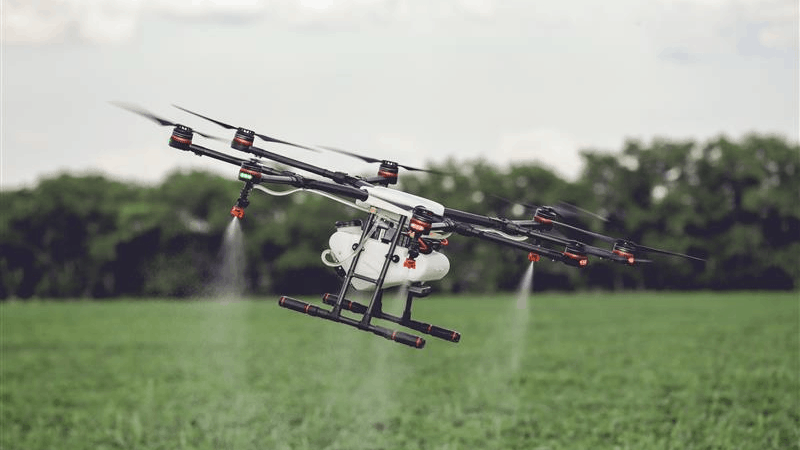
Innovative Power Technologies: Powering the Next Generation of Robotics
Using the best semiconductor for power devices, and choosing the right design, can make a significant difference to the energy efficiency of a motor drive and, implicitly, of a smart factory. WBG materials can deliver big power savings, as well as enabling compact, reliable power systems. Whatever your needs, get in touch with our experts to find out how we can guide you in choosing the right solution for your industrial automation applications.
GO TO OVERVIEW
Robotics display solutions
Looking for display solutions for your next robotics project? Our displays team have supported businesses of all sizes integrate display options into their robotics operations.