
In 2025, the International Energy Agency (IEA) reported that buildings accounted for around 30% of global energy demand, with space and water heating together representing approximately 70% of household energy use in advanced economies1. Improving how this energy is managed presents a substantial opportunity for heating, ventilation, and air conditioning (HVAC) equipment manufacturers and the engineers developing their systems.
Smart HVAC brings together a combination of sensing, embedded processing, and connectivity to match the operation more closely to changing conditions. Equipment can respond to occupancy, share information across building zones, and adjust output as demand changes. Increasingly, artificial intelligence (AI) can further extend these capabilities through demand prediction, equipment diagnostics, and more sophisticated, coordinated optimisation, helping systems anticipate requirements and identify opportunities to reduce unnecessary energy use.

CONTACT OUR SMART HOME & BUILDING EXPERTS
For engineers, delivering this intelligence requires an electronic architecture that connects accurate measurements with reliable decisions and efficient physical operation. From distributed sensors and connected thermostats to heat-pump controllers and building gateways, new equipment and retrofit applications bring different integration requirements. Avnet Silica supports engineers across these design decisions through its technical expertise and supplier portfolio, spanning embedded control, AI processing, connectivity, sensing, power conversion, and displays.
Smart HVAC Design Considerations
Smart HVAC operates at the intersection of human needs, changing building conditions, and machine control. Occupants want comfortable spaces, operators need visibility and control, and equipment must respond efficiently as demand shifts. Intelligence emerges from how sensors, local controllers, and building management platforms work together to interpret these needs, anticipate changes, and coordinate a response.

Click to enlarge Figure 1 - Total energy demand in the residential sector, by end-use, advanced economies and emerging economies, 2023 (Source: IEA)
-
Sensing and Control for Demand-Responsive HVAC: As HVAC control becomes more responsive to occupancy and indoor air quality, temperature alone provides an incomplete picture of demand. Combining temperature and humidity measurements with carbon dioxide (CO₂) sensing and passive infrared (PIR) or radar-based occupancy detection allows controllers to adjust ventilation, heating, and cooling more selectively. But this expands the requirements for sensor interfaces, signal conditioning, and local processing. Engineers must balance measurement accuracy and response time with the resources needed for control and sensor fusion, while managing sampling and transmission intervals in battery-powered nodes.
-
Connectivity for Coordinated Building Operation: Connecting these distributed measurements with equipment controllers creates opportunities for building-wide optimisation. HVAC networks increasingly carry the operating data and commands needed for coordinated control, AI analysis, and remote diagnostics. A single wireless interface may not cover every task. Multiprotocol modules can combine Bluetooth Low Energy for commissioning with Wi-Fi for network access, while Thread supports low-power sensor networks. Ethernet and RS-485 can also provide wired options for Modbus TCP and Modbus RTU, respectively. Retrofit designs also require compatibility with existing equipment and protocols, alongside attention to radio coexistence, protocol translation, and security.
-
AI for Predictive Control and Maintenance: AI allows HVAC systems to anticipate thermal demand and recognise changes in equipment behaviour. Forecasting models can adjust heating and cooling schedules around expected occupancy and weather, while machine learning analysis of vibration, current and temperature can identify anomalies that support condition-based maintenance. Where that intelligence runs depends on the workload. Compact models may suit microcontroller-based inference, while more demanding analysis can require AI acceleration or gateway processing. Model compatibility, memory footprint, and preprocessing all shape hardware selection.
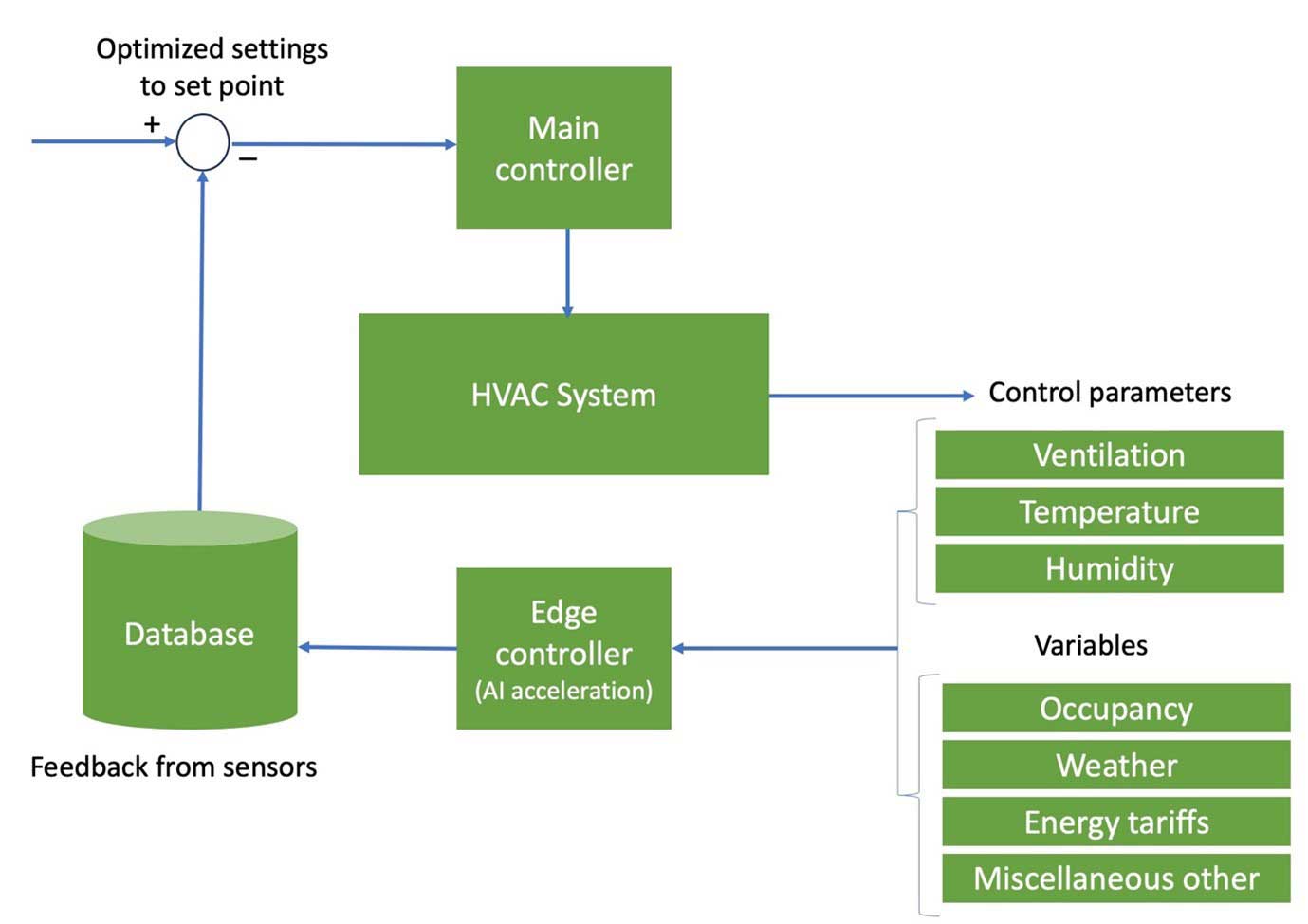
Figure 2 - A typical AI-assisted HVAC control system maximises efficiency and comfort (Source: Avnet Silica)
Overview
Smart Home & Smart Building Overview
Whether you’re developing a smart-home appliance or a system to control all of the functions in a commercial building, you need a partner who understands the associated standards, security aspects and data models. We helped create these standards.
Energy management is taking a central role in our increasingly connected world. It represents a fundamental shift in how we produce, consume, and think about energy, delivering benefits for all.
ENERGY MANAGEMENT-
Motor Control and Actuation for Variable Demand: Finer control of HVAC demand depends on compressors, fans, and pumps delivering efficient, stable output across a wider operating range. Coordinating motor speed with valve and damper positions brings that responsiveness to individual circuits and zones. Part-load efficiency, low-speed stability, and acoustic noise therefore become central design considerations. Field-oriented control (FOC) supports precise torque and speed regulation of permanent-magnet motors but requires current sensing and control algorithms tuned to the load. Integrated motor-control devices can combine processing and gate driving, while valve and damper actuators require appropriate positioning, holding-current, and stall-detection strategies.
-
Power Integration for Efficient, Reliable HVAC: The drive towards compact, efficient heat pumps is widening the choice of power-stage technologies. Alongside established silicon devices, silicon carbide (SiC) MOSFETs and gallium nitride (GaN) transistors can offer opportunities to reduce losses in inverter and power-factor-correction stages. Realising those gains requires matching devices to the voltage, load profile, and switching frequency. Higher frequencies can shrink magnetic components in power converters, but increase demands on gate driving, layout, and electromagnetic compatibility (EMC). Intelligent power modules offer a complementary route to integration by combining switches, drivers, and protection. Thermal performance and part-load losses also remain decisive when evaluating the complete design.
Key Technologies and Solutions for Smart HVAC
Avnet Silica brings together the processing, connectivity, and power technologies needed to develop smart HVAC equipment, supported by application expertise and supplier development platforms. Its portfolio spans individual sensing and control functions through to integrated equipment interfaces and building gateways.
-
Embedded Control and AI Processing: Avnet Silica offers a wide range of general-purpose and application-specific microcontrollers, application processors, and AI accelerators, giving engineers a choice of compute performance, power consumption, and peripheral integration to suit their HVAC designs. Where local control also requires embedded intelligence, NXP's MCX N94x and N54x microcontrollers combine microcontroller resources with integrated neural-network acceleration. For dedicated motor-control tasks, Renesas' RA6T2 microcontrollers provide processing and control peripherals suited to motor control applications. For building control hubs, advanced thermostats, intelligent HMIs and edge gateways, NXP's i.MX95 applications processor combines high-performance application processing with AI acceleration and industrial connectivity, enabling local analytics, predictive maintenance and building-wide HVAC coordination. Equally, for more demanding building-level AI workloads, engineers can draw on DEEPX's DX-M1 accelerator. Its PCIe interface supports integration into compatible edge gateways, where supported vision models could analyse occupancy to inform heating, cooling, and ventilation demand across complex building zones. Where smart HVAC systems require building-level optimisation, data aggregation and advanced analytics across multiple assets, AMD embedded x86 processors provide a scalable platform for edge servers, building management systems, and industrial gateways, supporting predictive maintenance, energy management, visualisation and cloud-connected building services.
-
Sensing and Signal Conditioning: STMicroelectronics' STTS22H temperature sensor combines factory calibration, an I²C/SMBus interface, and a power-saving one-shot mode, making it relevant to thermostats and distributed sensing. Its compact 2 x 2 x 0.50 mm 6-lead UDFN package allows for surface mount assembly, and the exposed pad down design ensures better temperature match with the surrounding environment. Humidity measurements help HVAC controllers determine when temperature control alone is insufficient for occupant comfort. Renesas' HS300x relative humidity and temperature sensors provide calibrated digital measurements over I²C, giving engineers feedback for humidification, dehumidification, and ventilation control without developing a separate analogue signal-conditioning circuit.
-
Wireless and Wired Connectivity: Supporting connectivity within equipment, across buildings, and to remote services, Avnet Silica’s portfolio includes solutions such as Nordic Semiconductor's nRF54L15 development kit. This provides a platform for evaluating the nRF54L15 wireless System-on-Chip (SoC) and can emulate the nRF54L10 and nRF54L05 wireless SoCs all on a single board, supporting the development of low-power Bluetooth Low Energy, Bluetooth Mesh, Thread, Matter, Zigbee, and proprietary 2.4 GHz protocols. Furthermore, Quectel’s Wi-Fi, Bluetooth, and cellular modules give HVAC designers options for commissioning, building-network access, and remote monitoring, including installations without a local internet connection. MaxLinear’s wired connectivity and analogue and mixed-signal portfolio support the network infrastructure and interfaces that connect equipment controllers and building gateways. Together, these suppliers broaden the connectivity choices for new equipment and retrofit designs.

-
Motor Drives and Power Conversion: Engineers can choose integrated control platforms or build around separate controllers, gate drivers, and power switches. STMicroelectronics' STSPIN32F0B combines a microcontroller and three-phase gate driver for low-voltage brushless motor designs. Diodes Incorporated’s broad non-isolated gate-driver portfolio supports both low- and high-voltage discrete motor-control and power-conversion stages, where separate device selection offers greater design flexibility. For higher-voltage drives, onsemi's EliteSiC SPM 31 intelligent power modules integrate 1200 V SiC MOSFETs, gate drivers, temperature sensing, and protection for applications including HVAC and heat pumps.
-
Displays and Human - Machine Interfaces: As HVAC equipment gains more operating modes and diagnostics, its interface must make those capabilities accessible to occupants, installers, and service engineers. Tria combines embedded computing with display, touch, and cover-lens integration, supporting both the processing platform and the physical interface. Its SimpleFlex platform offers configurable computing and interface options for human–machine interfaces (HMIs) and building automation. Standard platforms and customised assemblies give engineers routes to integrate graphical controls, configuration and service information while accommodating enclosure, display and product-lifecycle requirements.
AMD
x86 Embedded
Powered by the scalable “Zen” core architecture, the AMD EPYC™ Embedded, Ryzen™ Embedded, and Ryzen™ AI Embedded families deliver high-performance x86 compute with advanced I/O, integrated AI acceleration, and robust security features.
Renesas
RA6T2
The RA6T2 is the second product of the RA motor ASSP family. High-speed CPU performance and motor dedicated functions realize next-gen motor algorithm and differentiators in motor fields.
NXP
i.MX95
The i.MX 95 applications processor family delivers safe, secure, power efficient edge computing for use in aerospace, automotive edge, commercial IoT, industrial, medical, and network platforms.
NXP
MCX-N Series
The MCX N94x and MCX N54x are based on dual high-performance Arm® Cortex®-M33 cores running up to 150 MHz, with 2MB of Flash with optional full ECC RAM, a DSP co-processor and an integrated proprietary Neural Processing Unit (NPU).
DEEPX
DX-M1 M.2 LPDD5Rx2
The DEEPX DX-M1 M.2 module brings server-grade AI inference directly to edge devices. Delivering 25 TOPS of performance at just 2-5W, the module achieves 20x better performance efficiency (FPS/W) than GPGPUs while maintaining GPU-level AI accuracy.
Nordic Semiconductor
nRF54L15 Development Kit
The nRF54L15 DK (Development Kit) features the nRF54L15 wireless SoC (System-on-Chip) and can emulate the nRF54L10, and nRF54L05 wireless SoCs. The affordable DK makes all features available to the developer on a single board.
Frequently asked Smart HVAC questions
| Questions | Answers |
|---|---|
| What is smart HVAC, and how does it differ from conventional HVAC control? | Smart HVAC combines sensing, embedded processing, connectivity, and AI to continuously adapt heating, ventilation, and air conditioning operations to changing conditions. Unlike conventional HVAC systems that typically rely on fixed schedules or setpoints, smart HVAC can respond to occupancy, coordinate multiple zones, optimise performance in real time and integrate with wider building automation systems. |
| How can smart HVAC reduce energy consumption while maintaining occupant comfort and indoor air quality? | Smart HVAC uses environmental sensing, occupancy detection, zone control and AI-driven optimisation to deliver heating and cooling only where and when needed. By combining weather forecasts, temperature data, occupancy information and smart thermostat inputs, the system can proactively maintain comfort and indoor air quality while reducing unnecessary energy use. |
| Which wireless technologies and wired protocols connect HVAC equipment to building management systems? | Common wireless options include Bluetooth® Mesh, BLE and Thread. Wired building automation and control networks commonly use Ethernet, CAN, BACnet and KNX to connect HVAC equipment with wider building management systems. |
| Can existing HVAC systems be retrofitted with smart sensors and connected controls? | Yes. Existing HVAC installations can be enhanced with connected sensor units, intelligent actuators and wireless control networks to improve air quality, energy efficiency, comfort and system optimisation without replacing the entire HVAC infrastructure. |
| Which sensors are used in smart HVAC systems, and what do each measure? | Temperature sensors measure indoor and outdoor conditions; humidity sensors monitor moisture levels; occupancy and presence sensors detect room usage; air-quality sensors monitor indoor air quality; current and voltage sensors monitor electrical performance; and condition-monitoring sensors support equipment diagnostics and predictive maintenance. |
| How is AI used in HVAC demand prediction and predictive maintenance? | AI analyses weather forecasts, environmental conditions and occupancy patterns to predict heating and cooling demand before it occurs. It can also monitor equipment behaviour, detect anomalies, identify degradation trends and support predictive maintenance strategies that improve uptime and reduce maintenance costs. |
| How do I choose a microcontroller or AI processor for smart HVAC control? | The processor should be selected based on the application's motor control requirements, sensor count, connectivity needs, security requirements, and AI workload. HVAC applications commonly require support for compressor, fan, and pump control, sensor processing, wireless or wired communications, and, increasingly, edge AI functions such as predictive maintenance and demand forecasting. |
| How does variable-speed control improve the efficiency of HVAC compressors, fans, and pumps? | Variable-speed control allows motors to operate at the exact output required rather than cycling on and off at full power. Techniques such as field-oriented control (FOC) improve efficiency, reduce energy consumption and noise, and help extend equipment lifetime while maintaining comfort and performance. |
| When should I consider SiC or GaN power devices for an HVAC design? | Wide-bandgap materials such as SiC and GaN are well-suited to HVAC designs where higher efficiency, greater power density, and improved thermal performance are required. SiC is particularly effective in high-power PFC and inverter stages, while GaN is attractive where high switching frequencies, compact size and reduced system weight are priorities. |
| Which smart HVAC components and design support are available from Avnet Silica? | Available technologies include MCUs, MPUs, motor-control solutions, power-conversion devices, current and voltage sensing, environmental sensors, wireless connectivity, displays, HMIs, security solutions, AI-enabled control platforms, predictive-maintenance technologies and embedded computing platforms. In addition, system-level design, integration and technical support are available from concept through production. |
Develop Your Smart HVAC Design with Avnet Silica
The transition towards more efficient buildings creates opportunities for HVAC equipment manufacturers and their technology partners. Heat pumps alone represent a significant area of growth, with preliminary European Heat Pump Association figures showing sales grew by 10.3% across 16 European countries in 20252.
The opportunity extends beyond sales growth to improving what equipment can do. Engineers can embed intelligence into new designs or bring sensing, connectivity, and more responsive control to existing installations through retrofit upgrades.
Avnet Silica’s technical specialists and supplier portfolio help engineers address these opportunities, from component selection to development-platform evaluation. Explore our technologies, tools, and technical resources to support your next smart HVAC design.
Sources
- https://www.iea.org/reports/energy-efficiency-2025/buildings
- https://ehpa.org/news-and-resources/news/heat-pump-sales-testify-to-government-action/
Working on a Smart Home or Building Automation project?
Our experts bring insights that extend beyond the datasheet, availability and price. The combined experience contained within our network covers thousands of projects across different customers, markets, regions and technologies. We will pull together the right team from our collective expertise to focus on your application, providing valuable ideas and recommendations to improve your product and accelerate its journey from the initial concept out into the world.