
86% of New Wind Energy Startups in Europe Focus on Alternative Turbines, Software and Sensors
Useful jump links:
The proportion of European wind energy startups focusing on conventional (horizontal-axis) turbines and components has fallen considerably over the past 30 years, from 64% of startups founded in the industry between 1996 and 2000 to 14% of those founded between 2021 and 2025.
Over the same time period, the proportion of new European wind startups focusing on alternative turbine designs has risen from 9% to 37%, and the proportion providing software and sensors has increased from 27% to 49%, according to new research by Avnet Silica.
As wind turbine technologies continue to evolve, Avnet Silica analysed Crunchbase data to take a deeper look at the different products European startups are bringing to market, how much funding they’ve raised, and which products are attracting the most investment.

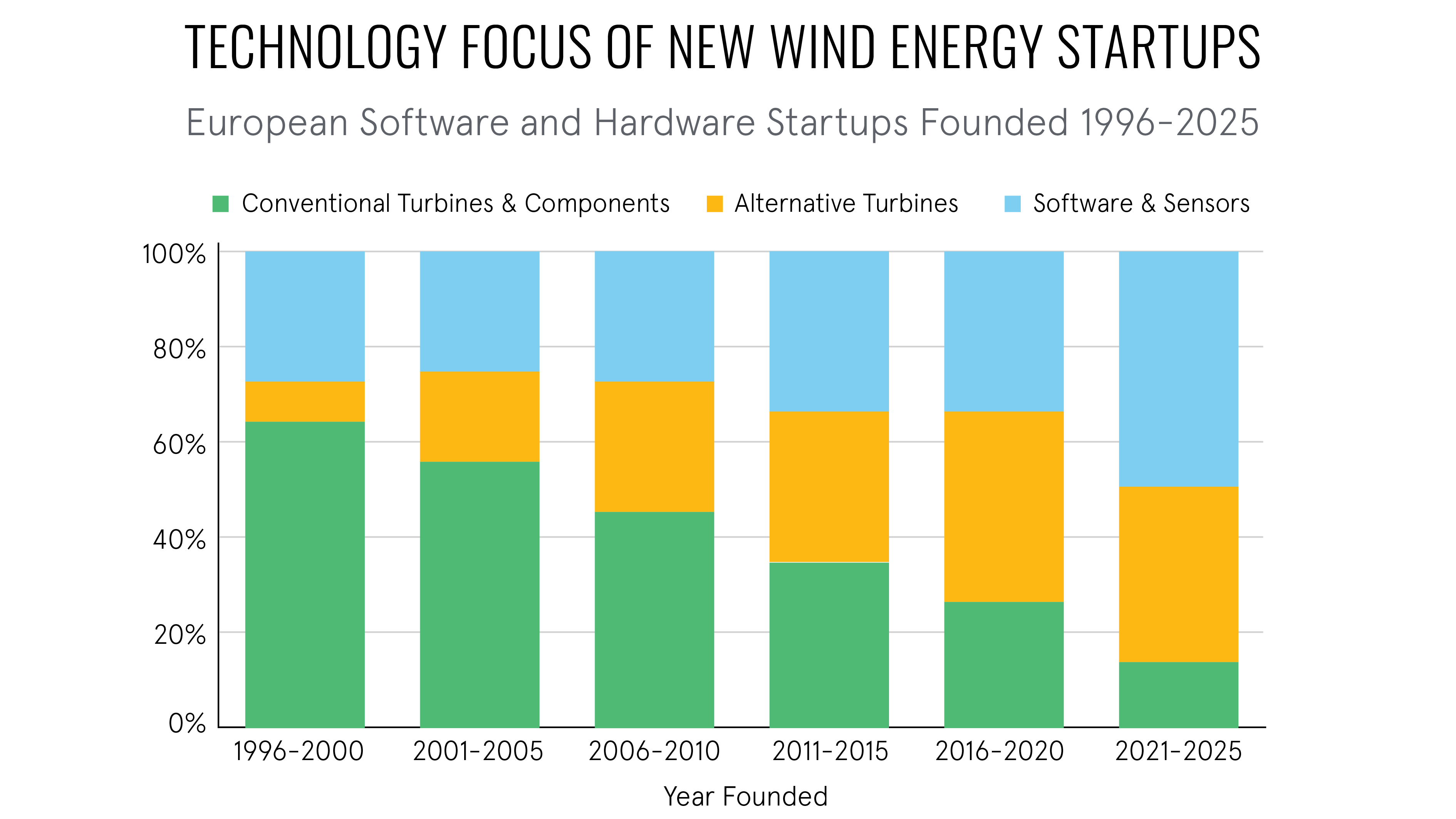
Image: Avnet Silica
Software and sensors set up to monitor, predict and optimise
Among software and sensor startups setting up in Europe, 31% are focused on wind measurement and energy forecasting, 29% on turbine monitoring and inspection, and 26% on performance optimisation and predictive maintenance. A further 11% provide tools for project and operations management, while 3% specialise in cyber security.
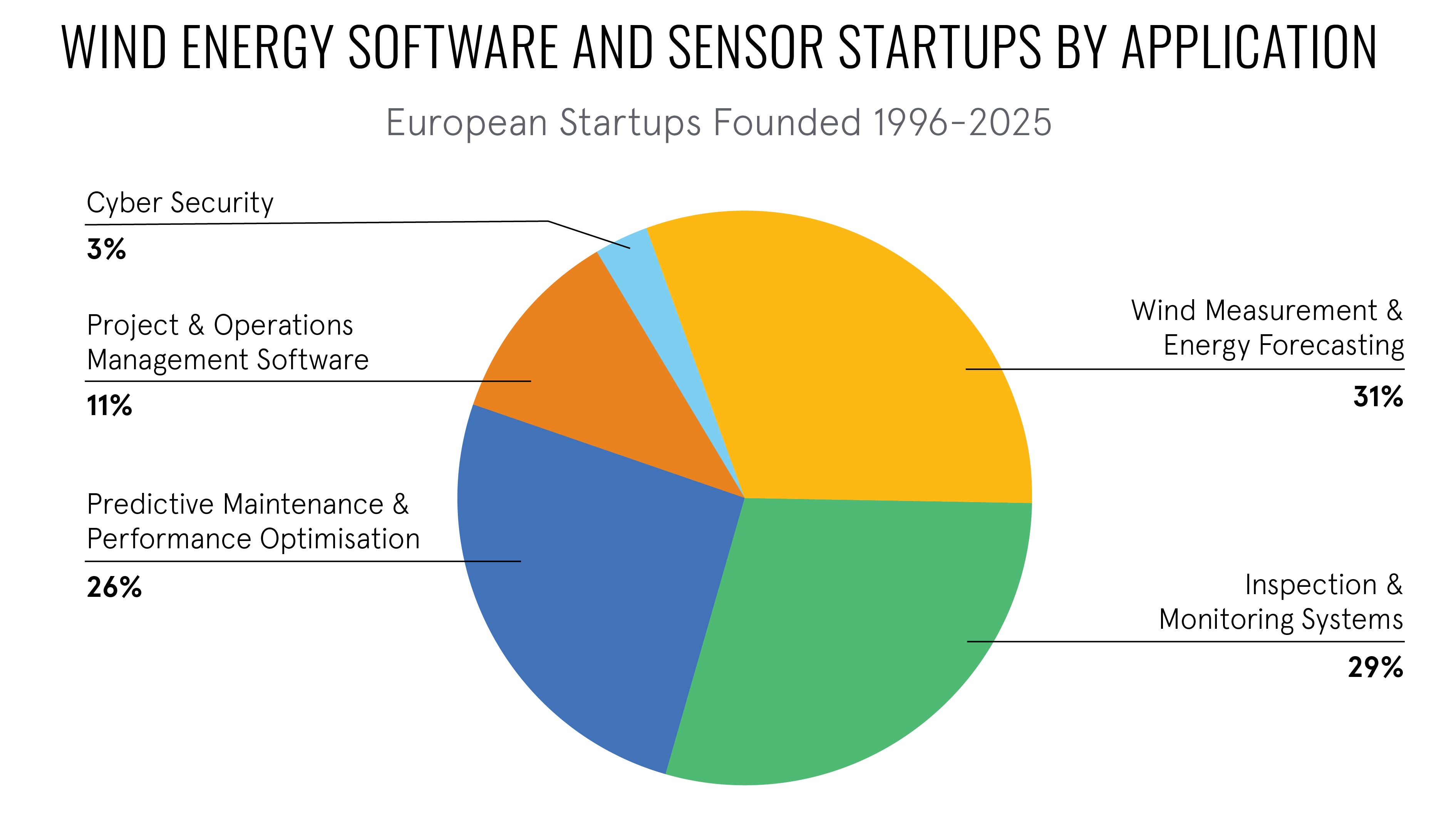
Image: Avnet Silica
Emerging Markets & Technologies
At the Pulse of the Market
We're always at the pulse of the market. Explore the trends shaping real innovation: AI, Automotive and ADAS, 5G, Renewables, and more. Act sooner, design smarter, and stay ahead of the curve.
Startup support
Tech/Electronic startup looking for support?
At Avnet Silica, we believe that every great innovation starts with a bold idea and a trusted partner. That’s why we’ve created a dedicated initiative to support electronics startups on their journey from concept to market-ready product.
The rise in airborne turbines and alternative designs
While 72% of companies founded between 2006 and 2015 offering alternative wind turbines opted for a vertical-axis design, this dropped to 37% between 2016 and 2025, with airborne (kite) technologies accounting for 33% of new entrants to the market. At the same time, a variety of new shapes appeared, including conical, spherical, ducted, bladeless, and multi-rotor turbines.
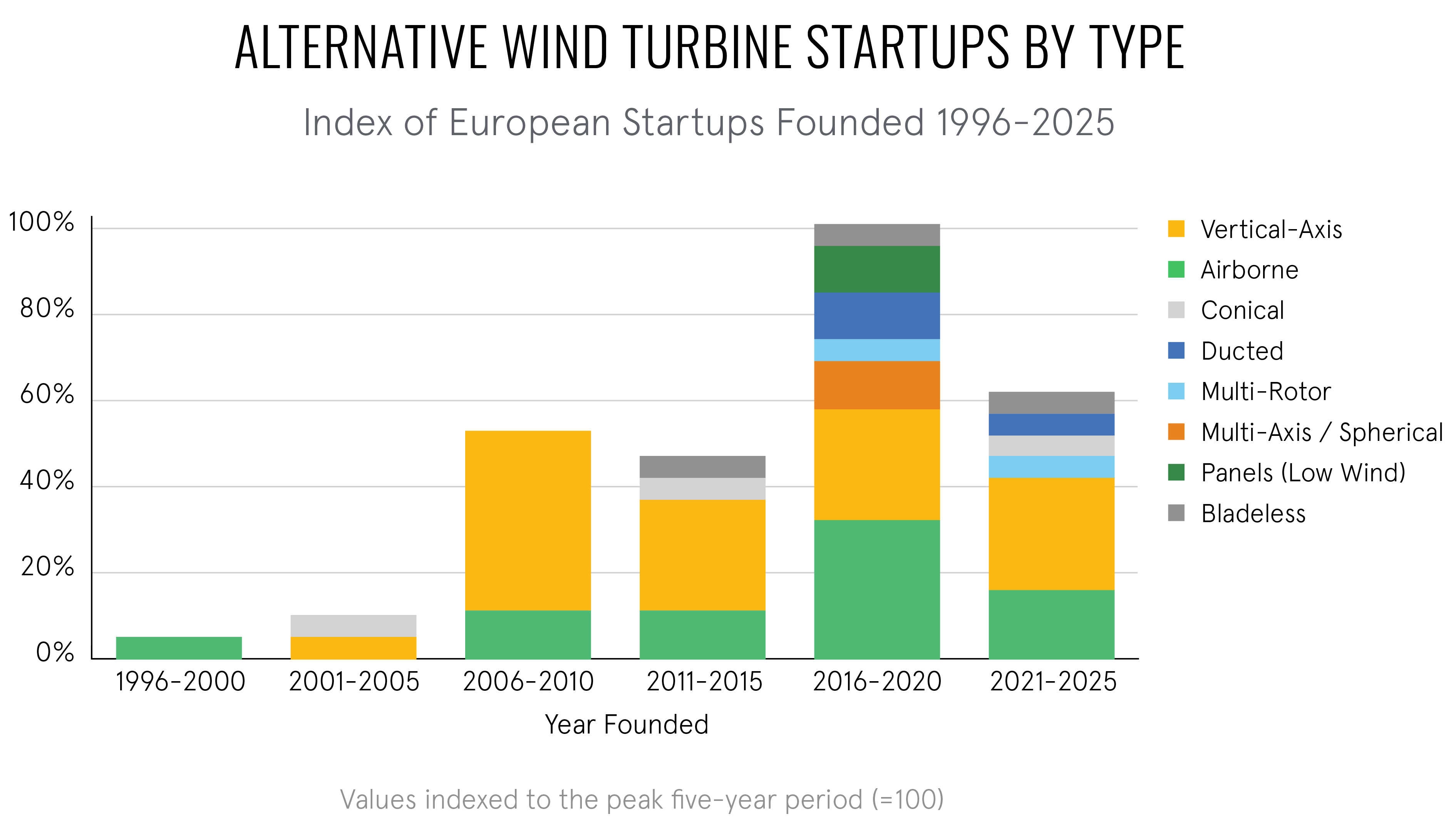
Image: Avnet Silica
European wind energy startups offering software and sensing technology have now raised a cumulative total of €83.5 million. The two companies drawing in the most have been Norway’s Spoor, raising €11.8m for their AI-powered bird and bat monitoring, and Britain’s Cyber Energia (now Centrii), receiving €11.4m for their cybersecurity system.
For providers of alternative turbines, the largest grants and funding rounds have both gone to offshore wind propositions, with Sweden’s Sea Twirl receiving a €15m grant in 2025 for their floating vertical-axis turbine, and Norway’s multi-rotor Wind Catching System pulling in €9.6m in equity funding.
Reflecting on the findings, Harvey Wilson, Senior Manager Industrial Vertical Markets EMEA at Avnet Silica, comments:

“Startup activity offers a unique lens through which to view innovation in any technology space, even one dominated by well-established players like wind energy. Where new companies choose to compete shows us where opportunities exist, problems remain to be solved, costs can be saved and more value created.
The lack of new entrants in conventional turbines shouldn’t however be interpreted as a lack of innovation. It’s just happening in a different place. Across the value chain, suppliers of electronic components and large turbine OEMs continue to iterate and transform the products they’re bringing to market.
The same challenges that software and sensor startups are attacking from the outside, large scale manufacturers are aiming to engineer from within, continually increasing the levels of integration between hardware, software and sensors to gain greater levels of visibility and control.
While producers of alternative turbines are exploring the boundaries of how and where wind energy can be generated, OEMs and software startups are tackling constraints within the current system, to maximise the value and energy they can gather from the wind.
It’s always interesting to see how different companies push the boundaries of current technologies, to challenge themselves and others to do things differently, more efficiently, and to drive more business value.”
DATA SOURCES & METHODOLOGY
Source: All companies listed under wind energy in the Crunchbase dataset with headquarters in Europe, as at 31st August 2026.
Further research was conducted by visiting each company’s website, its profile on Crunchbase, its LinkedIn profile, and third-party news articles to provide more granular details on the product and service offerings of each business. This allowed further categorisation of the companies in the list into more specific classifications.
The data was filtered to only include companies predominantly specialising in wind energy, and not those offering a general product which serves the wind industry among many others, nor those offering a range of products where wind energy was not the primary focus of the company.
The analysis then focused on startups specialising in the development of wind energy hardware and software, including specialist offerings across the product lifecycle, from developing turbine components through to end of life recycling.
This involved excluding companies that are focused on, for example, energy and commodities trading, online marketplaces, project development, installation, operations and maintenance, consulting services, and other closely related products and services.
Disclosed equity funding includes seed, angel, VC, private equity and corporate funding rounds. It does not include equity crowdfunding. It also excludes grants, debt financing, IPO and post-IPO funding.
Where the stage of a funding round (e.g. seed, venture round A, B, C, etc) was not explicitly stated, this was determined by assessing the information within the full context of the dataset, including other funding rounds the company has received.
It’s worth noting there is often a time lag between recent events and the original dataset being populated. This is especially true of information about new companies being founded or receiving seed and early stage funding.

High-Efficiency IGBTs
IGBTs are a key enabling technology for wind energy, delivering efficient high-power switching and conversion in turbine power electronics to maximise energy capture and reliable grid integration.
Wide Bandgap Technology: SiC & GaN
SiC and GaN technologies enable more efficient wind energy systems, with SiC playing a leading role in high-power turbine converters while GaN supports compact, high-efficiency auxiliary power and control systems.
High-Efficiency MOSFETs
MOSFETs are a key enabling technology for wind energy, delivering efficient power switching and control in turbine converters, power supplies and monitoring systems to maximise energy generation.
Other Wind Energy resources
Powering Wind Energy - Global Emissions, Swept Away
To meet global goals for emissions reductions, we need to generate more electricity from renewables – and lots of it. Solar photovoltaic (PV) systems may be the centre of attention, but wind power is also a vital contributor to our push towards net zero. How is progress in the wind power generation industry? And what can the power electronics sector do to help us hit our targets? We take a closer look at the key to efficient power conversion and SiC vs IGBTs in wind power.
We Talk IoT Podcast - Episode 37: Unleashing the Power of Wind Energy
Hold on to your hats: In today’s episode, we discuss one of the fastest-growing renewable power sources: wind energy. Did you know that a single wind turbine has the potential to generate enough electricity to power 1,400 homes?
In this episode, we welcome Barry Thompson, CEO of Alpha 311.
We'll unpack how cutting-edge technologies and ingenious strategies are evolving in this sector, emphasizing the impact of IoT in enhancing turbine efficiency. Our discussion will also cover the ecological benefits of wind power and a forward-looking perspective on this form of renewable energy.
Market Research
€82M for European Solar Startups as Investment Stabilises in 2026
After dropping from an all-time high of €285M in 2023 to a decade low of €24M in 2025, venture capital investment in solar hardware and software startups in Europe has stabilised in 2026, with €82M in disclosed equity funding this year.
Market Research
European energy storage hardware startups raise €2.14B
Total equity funding for European startups in energy storage hardware has topped €2.14 billion. 46.7% of the 2.14 billion was raised in the last three years, and 84.4% in the last five, reveals research from Avnet Silica.
Market Research
BESS startups expand value proposition as competition grows
European startups manufacturing Battery Energy Storage Systems have acquired $331.8 million in equity funding, with 75% of the companies estimated to have reached a phase of commercial maturity, reveals new research from Avnet Silica.
Further insights
The Future of Energy Storage
Learn where the energy storage investment is flowing, future energy storage technologies and applications, sustainability/engineering considerations, and much more.