AI is powerful Magic: Interview with Toby Walsh

We seem to be in the middle of what you could almost call an AI bubble. Countless companies are finding ways to squeeze “AI” and “machine learning” into their descriptions to gain investment and clients and the Internet is awash with companies offering “smart services” for almost any problem. But AI has been around for quite a while, so what’s all the fuss about?
TW: There are four exponentials that together mean we’re making real progress on the goal of building intelligent machines. First, the doubling every two years or so of compute power, otherwise known as Moore’s Law. Second, there’s a similar doubling in data, which is helping support much of what we do today in AI via machine learning. Of course, the Internet of Things is only going to add to that trend! Third, we’ve had a doubling again every two years or so in the performance of some of our algorithms. Deep learning is a case in point. And the fourth exponential is in the amount of money flowing into the field. This is also doubling every two years. Put all of these in a pot and you have a recipe for progress.
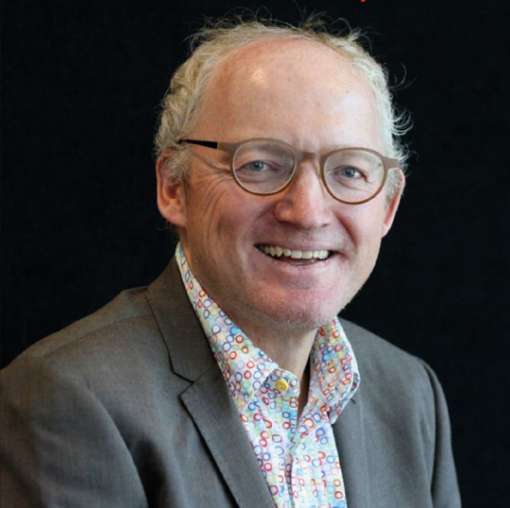
Toby Walsh is often called the “rock star of AI.” He works as a professor at the University of New South Wales and is a fellow of the Australia Academy of Science. As a leading voice in the discussion about killer robots, he has been asked to speak before the UN in New York and Geneva. This interview was conducted by Dale Rickert, Portfolio Director at Industry of Things World in Berlin.
Are we actually getting ahead of ourselves here, or could we be closer to general machine intelligence than we think?
TW: No, artificial general intelligence, or AGI, is still a long way away; 50 to 100 years, if you ask most of my colleagues, or perhaps even longer. We have only made progress on building narrow intelligence.
There was a time back in the ’80s and 90s where AI was almost a dirty word.
TW: Well, it’s nice to come back into fashion again. There was some overpromise in the ’80s that led to a bit of a backlash. But this time, we’re having a real impact on real problems so I’m not too worried about another AI winter.
Some people say that we have reached a point in the last five years that is akin to the “primordial soup” for AI. If this is the case what are the key ingredients that have allowed AI to thrive?
TW: Compute power, data, and better algorithms!
What for you is the most exciting current development in your field?
TW: It’s hard to pick on one area as AI is having so much impact on so many aspects of our lives. It really will be like electricity in this respect. But if I had to pick one, it would be the impact it is starting to have on health care.
What advice would you have for a manufacturing company looking at injecting some machine intelligence into their operations?
TW: Don’t start too big. Start small. Don’t start on a critical path. Look perhaps to help strategic decision-making first before you go into the operational.
Artificial General Intelligence is still a 100 years away. We have only made progress on building narrow intelligence.
If you could give advice to manufacturing companies on how to approach the three most important aspects of their operations, what would they be?
TW: Business models and market strategy, human vs machine roles and skills, and social corporate responsibility. Take the savings from AI to improve your product or service, not simply to reduce costs. Look to augment not replace people. And where you do replace, look to reskill. And think carefully about the ethics of what you do. AI is powerful magic. It’s easy to encroach on people’s privacies and other basic rights.

Sign up for the Avnet Silica Newsletter!
Stay up-to-date with latest news on products, training opportunities and more!
Take a DEEP look into the future!
Get the latest market trends and in-depth trainings on our Digital Event Experience Portal!
Avnet Silica Design Hub
Browse and review hundreds of proven reference designs to accelerate your design process. Our designs can be modified and saved in our AVAIL design tool and then exported to your CAD tool of choice.